Space debris detection radar:
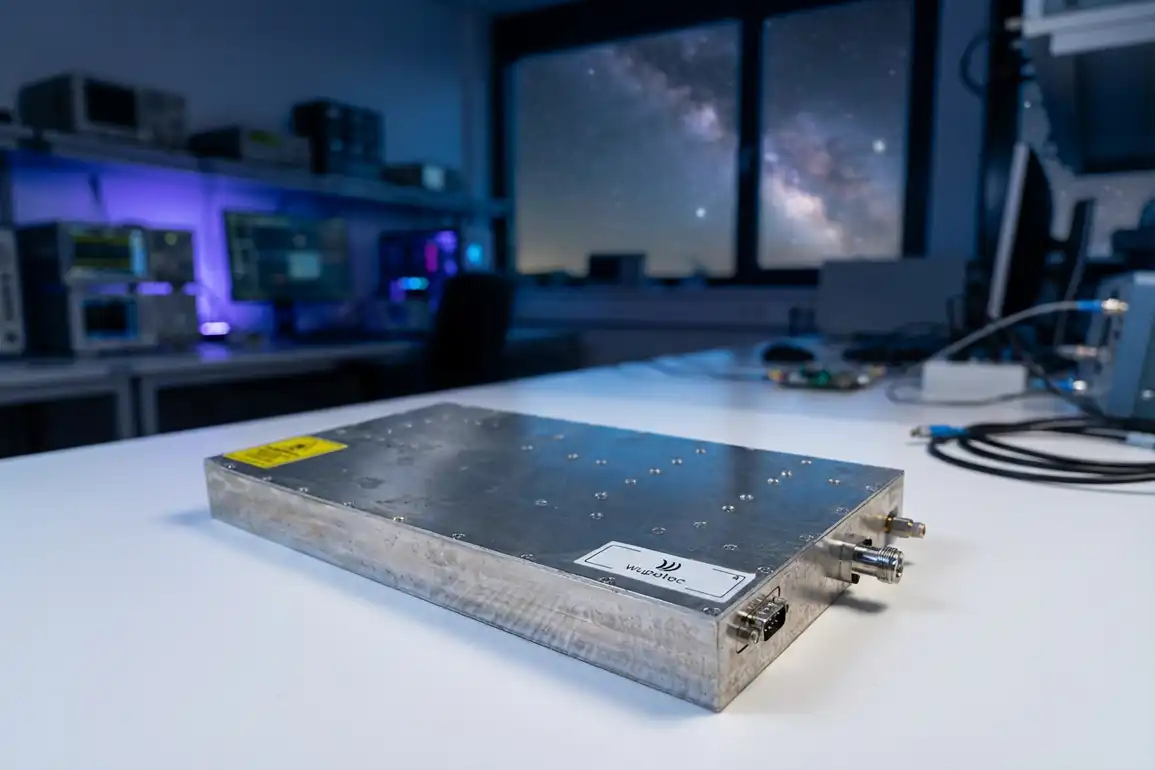
RF amplification chain and digital control modules
A key project milestone addressing one of today’s major New Space challenges has recently been completed.
This collaborative project, led by Lookup Space together with European companies, aimed to develop a phased array radar system capable of detecting space debris of 10 cm in Low Earth Orbit (LEO). Achieving this required a robust RF architecture combined with a reliable digital control backbone, ensuring stable performance across wide bandwidths and delivering high power levels while operating in all-weather conditions.
WUPATEC’s role was to deliver the RF power amplification chain and the digital foundation of the radar. This included:
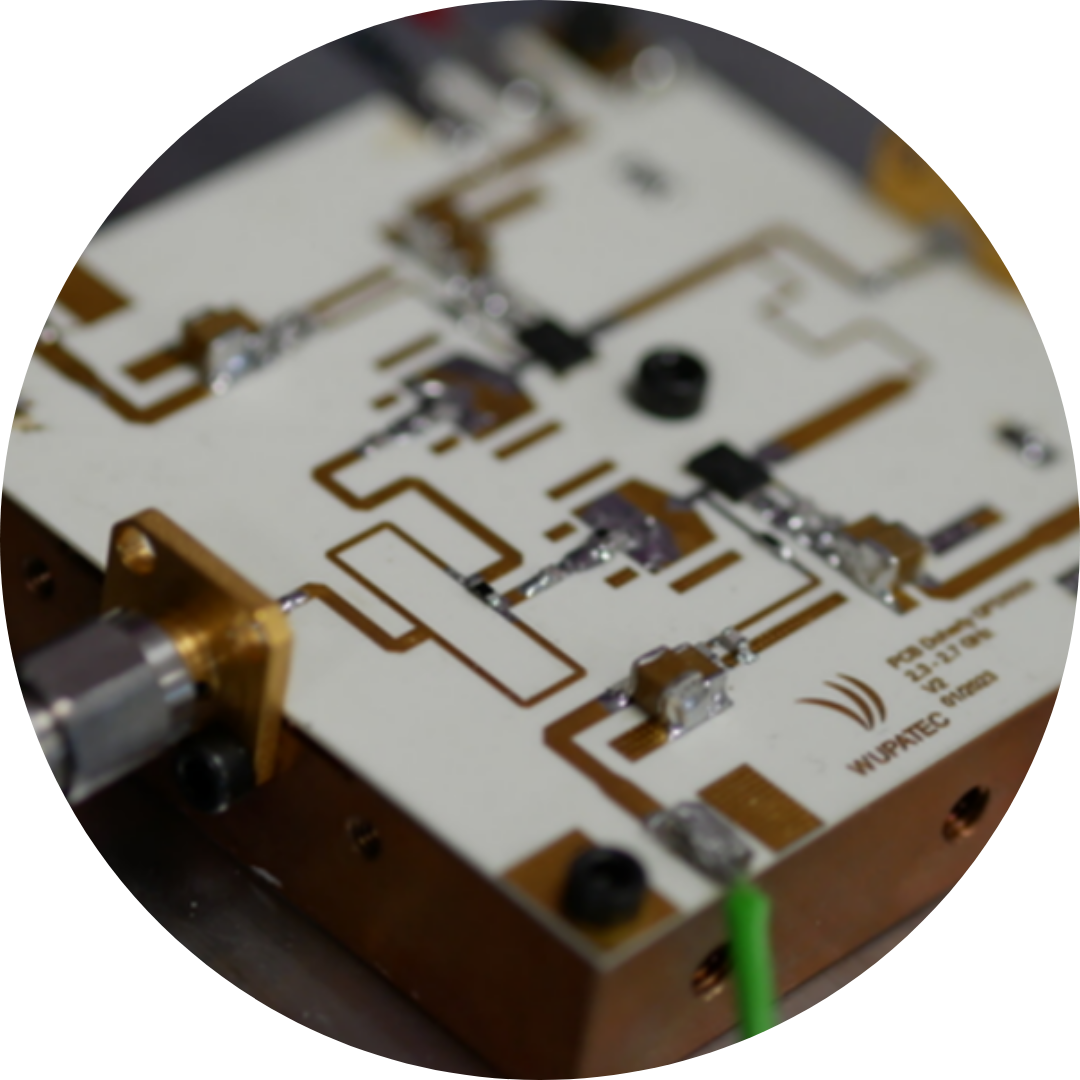
Design of the prototype RF power amplification chain module that would serve as the foundation for the manufacturing of ~200 modules.
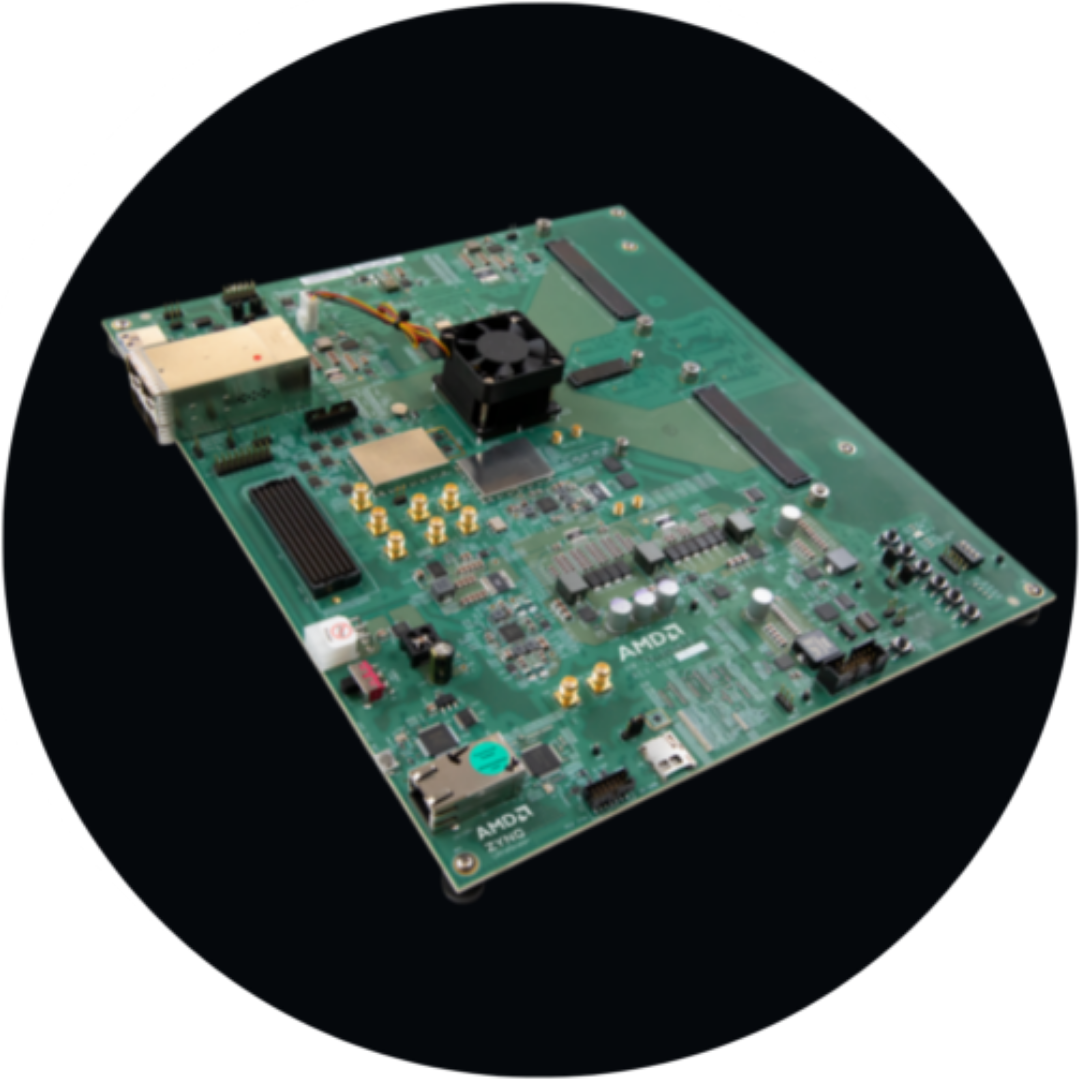
FPGA-based control, meaning that the 200 modules were managed in real time through the same FPGA. The FPGA was also in charge of generating the radar signals.
Challenges encountered
Within Wupatec’s team, the work was divided between the digital design group and the RF design group.
In the RF part:
According to the RF team, the main challenges in developing the RF power amplification module were the following:
Integration of the individual power amplifiers into a single amplification chain. After each power amplifier stage had been designed, integrating all stages into a complete chain introduced several stability issues. Unwanted resonances appeared, affecting the overall performance and degrading the expected output. The team performed a thorough re-tuning of the chain, including impedance adaptation and mechanical adjustments (such as optimizing internal metallic partitions) to remove these undesired behaviours and achieve the target performance defined for the project.
Managing the radar pulse characteristics at high power levels. A significant portion of the development time was dedicated to handling the radar pulse, especially its duration at high output power. The amplification module operated at approximately 54 dBm (around 250 Watts), and the specifications required operation at up to a 50% duty cycle. This had a major impact on the thermal design: isolated components were at risk of overheating or failing under sustained high power. Additionally, at a 50% duty cycle, several component-level instabilities were observed. By refining the design of the different sub-modules and their interactions, these pain points were addressed, ensuring compliance with the project’s performance and reliability requirements.
In the digital part:
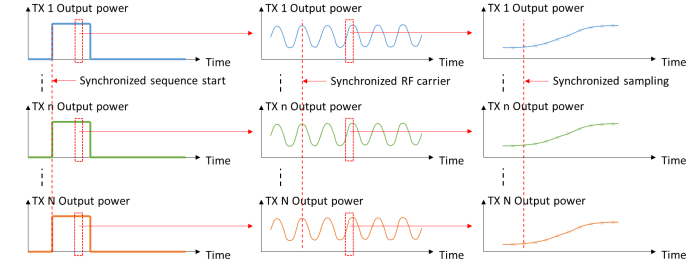
The implementation of beamforming on such a large phased array was identified as a primary challenge. Due to the high number of modules involved, the synchronization of the entire system was particularly complex:
Synchronization Precision: A precision of less than 10 picoseconds had to be achieved. This was required to maintain full coherence across the RF phase, the pulse envelope, and the sampling instants for every channel.
Phase coherency in the transmission path
2. Scalability: The RF pulses are generated and captured using FPGA modules, each managing more than a total of 30 transmit (TX) and receive (RX) channels.
3. Coherent Integration: A method was developed to associate multiple FPGA modules. This allowed the system to function as a single coherent radar for all the channels, which was necessary for the detection of small space debris.
Key achievements
Successful integration of RF and digital systems.
Enhanced signal performance and improved efficiency.
Scalable technology applicable to other radar and communication systems.
This collaboration resulted in a scalable and efficient detection platform, able to support future debris-tracking missions and growing orbital-traffic needs. By combining RF reliability with stable digital control, the solution demonstrates how compact, high-performance electronics can meet the constraints of modern New Space applications.
With this project, WUPATEC reinforces its commitment to delivering dependable RF and digital technologies for spaceborne systems and next-generation orbital surveillance.
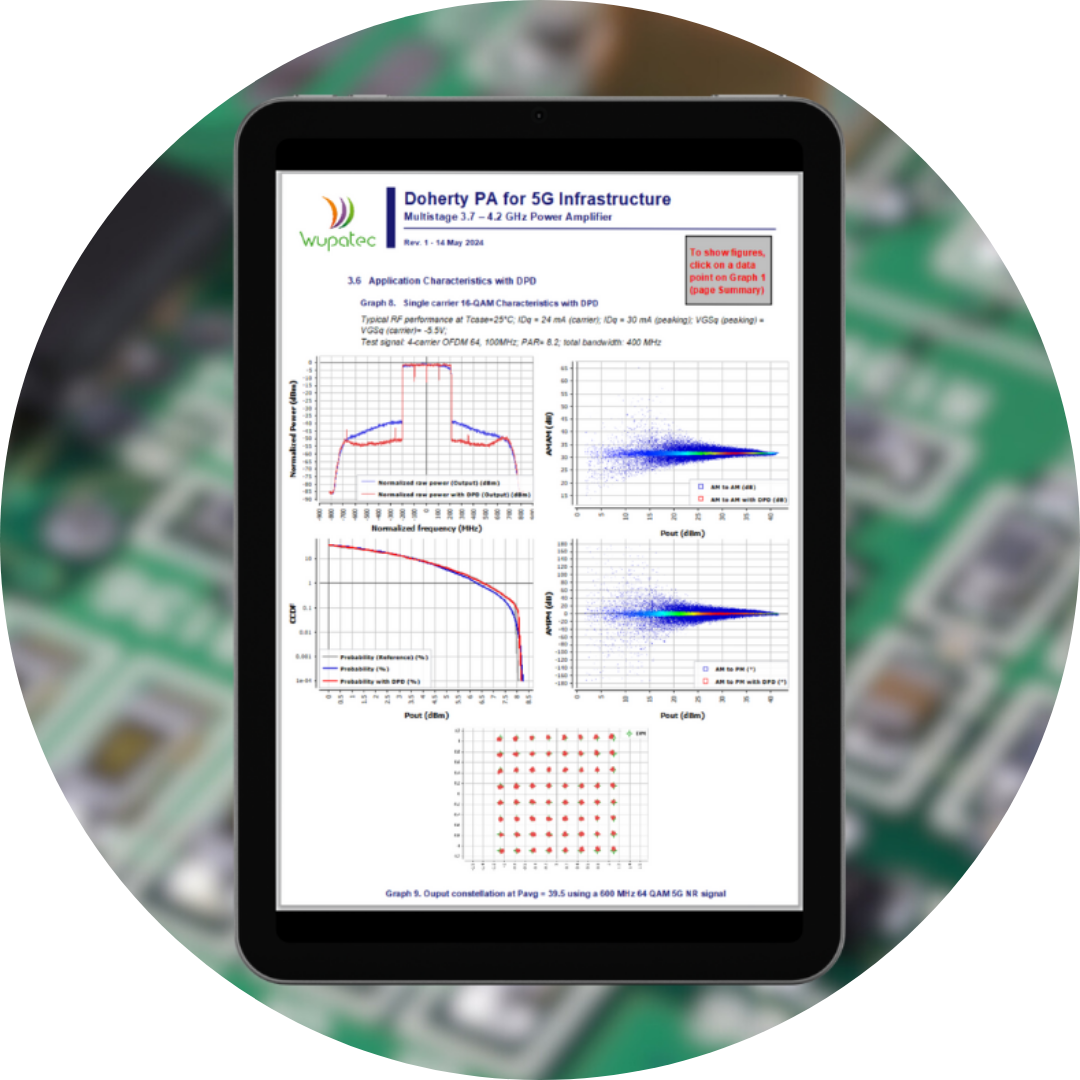
Wupatec’s two pillars reside in its strong digital and analog knowledge. By having expertise in both fields RF and digital, we ensure DPD friendliness, or the amplifier’s behaviour can be anticipated during the design phase towards its final environment. Let’s work together.






 +33 05 55 42 62 44
 Head Office: 20 rue Atlantis, 87068, Limoges, France