Accueil » Vector Signal Transceivers » FR3 Extension Board – WFC725A
FR3 Extension Board – WFC725A
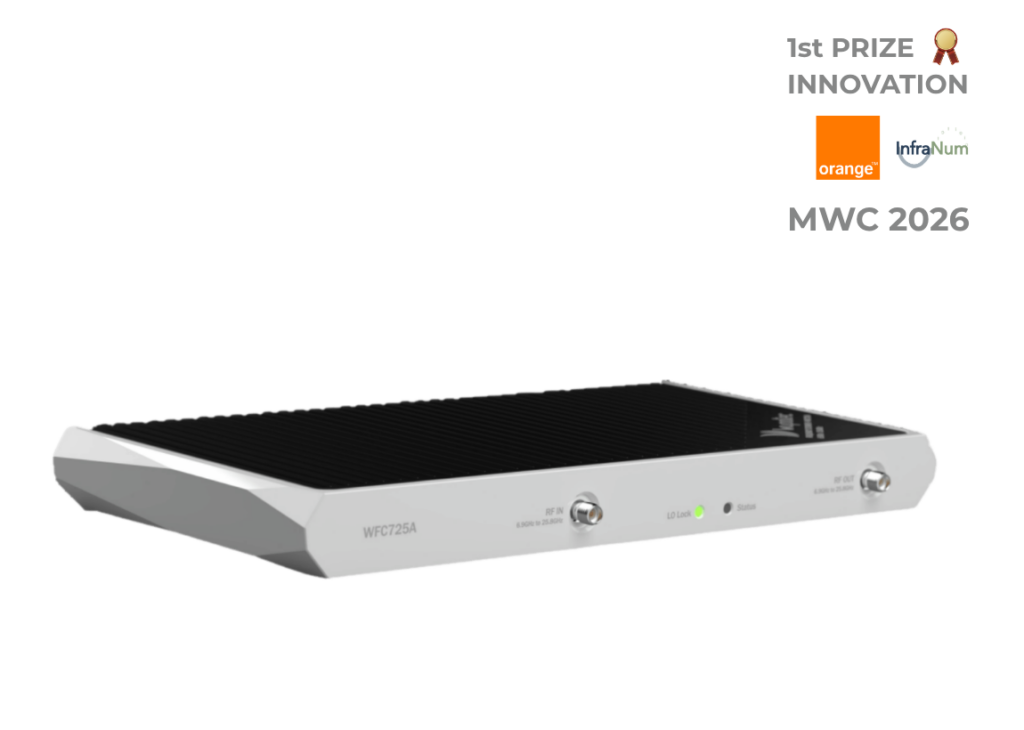
Designed for researchers, network innovators, and system manufacturers, this compact, plug-and-play RF Front-End translates RFSoC’s native 10 MHz–7.125 GHz coverage into the emerging FR3 spectrum, enabling rapid prototyping of 5G-Advanced and 6G systems.
Frequency Range
Combined Frequency Range
Instantaneous Bandwidth
sampling rates
PRODUCT DETAILS
A full FR3 front-end
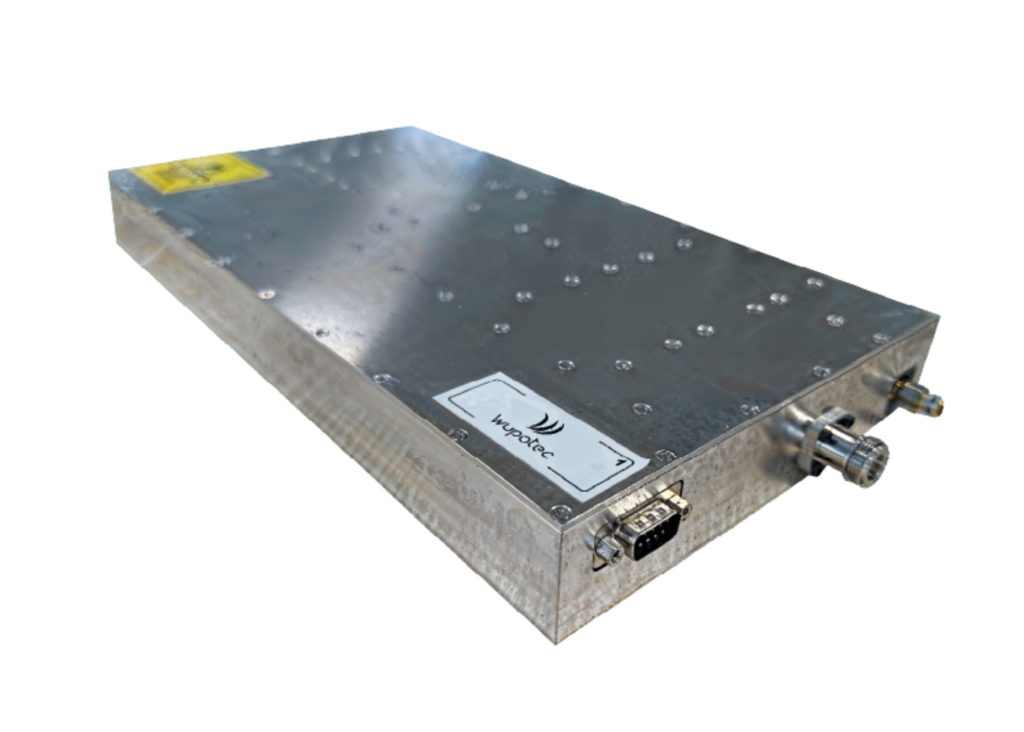
The WFC725A is a high-performance 6G Frequency Range 3 (FR3) radio front-end (RFFE) module, specifically engineered as a frequency extension for Vector Signal Transceivers (VSTs). It supports a wide frequency range from 6.9 GHz to 25.8 GHz, and when combined with the base VST, it covers a total of 10 MHz to 25.8 GHz. It highlights a wide instantaneous bandwidth (iBW) of up to 1.2 GHz. This board enables seamless up- and down-conversion, making it an essential tool for wideband signal generation and analysis in next-generation wireless infrastructure
Key Features
- Full FR3 coverage
- Instantaneous bandwidth maintained across the full frequency range
- High-performance signal chain
- Full FDD/TDD versatility: simultaneous or alternated Tx/Rx
- Integrated LO (no external RF source required)
- Phase coherency across multiple channels
- 5G-Advanced & 6G ready in base station-like conditions
- Compact & robust: 2.6 cm × 25 cm × 13 cm
WFC725A vs. Other Solutions
| Criterion | Other Solutions | WFC725A ✓ | Why it matters |
|---|---|---|---|
| Full Frequency Coverage | Limited (typically 6–18 GHz) |
ADVANTAGE 6.8–25.8 GHz, or from 10 MHz-25.8 GHz with base VST |
Flexibility across radar, 5G/6G and satellite bands |
| Operating Mode | TDD only, or TDD/FDD |
ADVANTAGE Full FDD/TDD versatility |
Simultaneous Tx/Rx without hardware change |
| LO Integration | External RF source often required |
ADVANTAGE LO fully integrated |
Reduces system complexity and SWAP constraints |
| Instantaneous Bandwidth | Limited to ~1 GHz |
ADVANTAGE 1.2 GHz across full range |
Higher throughput and better signal resolution |
| Physical Durability | Sometimes bare board, fragile | Robust integrated design | Reduced time-to-market for payload integration |
| Customer Support | Often slow, impersonal | Agile & dedicated technical partnership | Personalized attention from the engineering team |
How it works
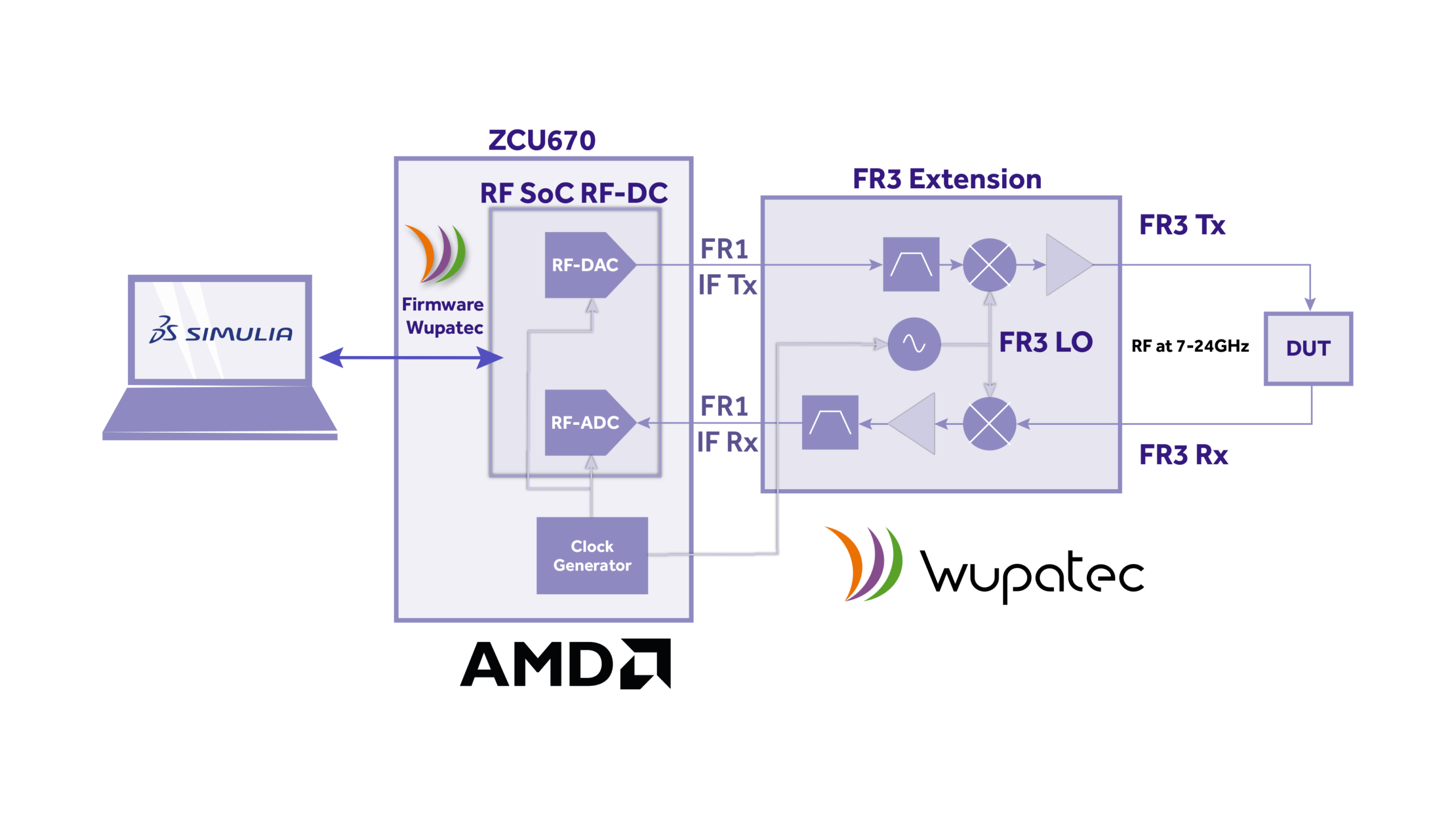
The WFC725A enhances VST measurement capabilities by extending the RF frequency range to FR3 using frequency transposition from an intermediate frequency compatible with the AMD RFSoC DFE.
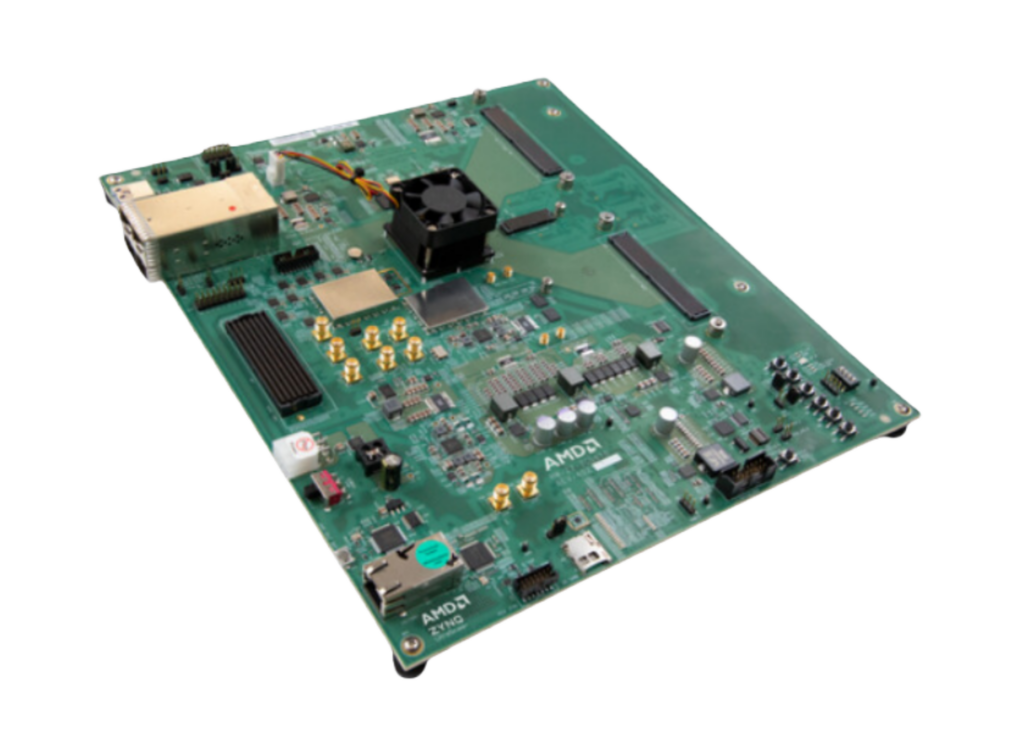
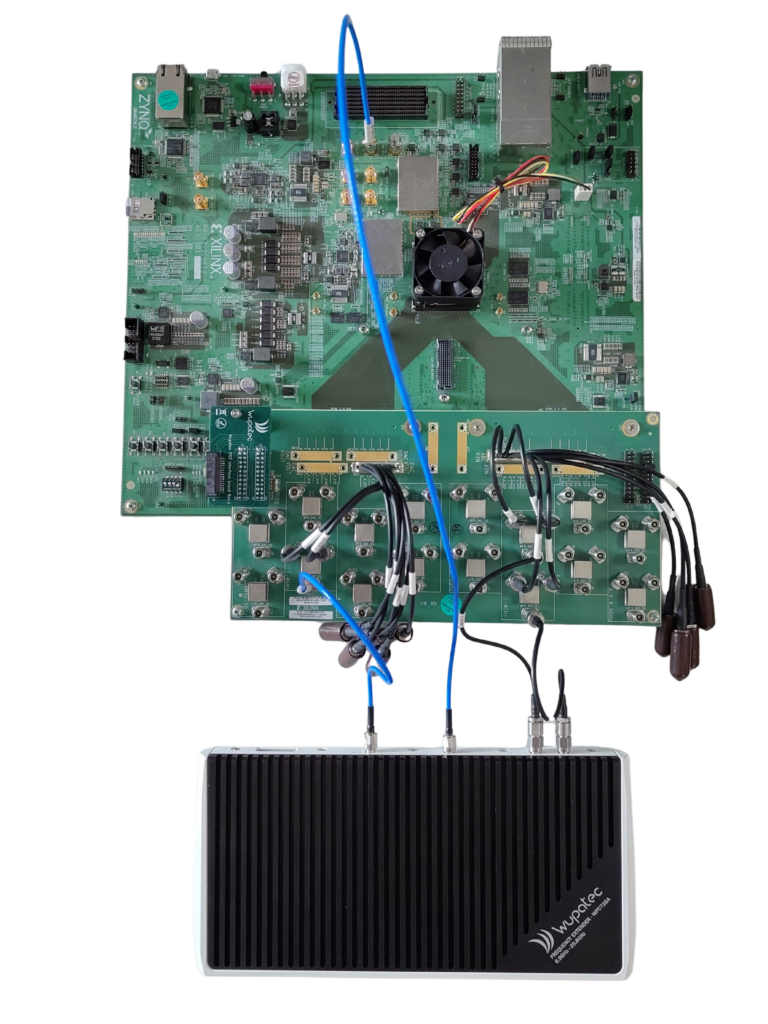
The WFC725A is controlled by the Wupatec VST firmware embedded in the AMD ZCU670 board. The Wupatec VST firmware automatically detects and configures the WFC725A when connected, enabling VST measurements from 10 MHz up to 25.8 GHz without any additional configuration needed by the user.
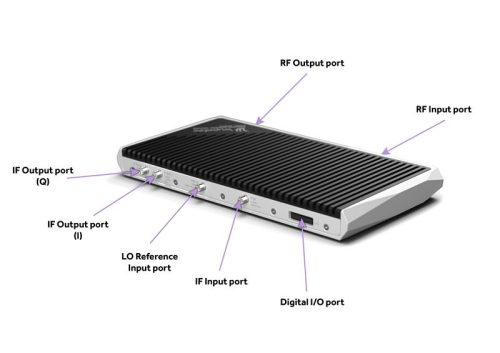
The WFC725A is connected to the AMD ZCU670 (or any base board) using the following connections:
For further details, please download the brochure here.
APPLICATIONS

5G Advanced / 6G
6G prototyping: tests of new waveforms and ultra-wideband signals in the newly allocated mid-band spectrum with unmatched precision. Over-the-air (OTA) testing, MIMO.

NTN
Validation of satellite transponders and user terminals, direct up-conversion and down-conversion for seamless RF-to-Digital workflows.

Radar & Electronic Warfare (EW)
Aerospace and defense sectors: simplification of the emulation of complex pulsed radar signals and the testing of interference mitigation for drone detection, satellite tracking, and modern electronic warfare systems.

Wideband PA Characterization
Comprehensive testing of GaN on SiC and other advanced semiconductors. When paired with our DPD (Digital Pre-Distortion) and CFR IPs, it ensures your Power Amplifiers meet strict linearity requirements in the FR3 band.
TECHNICAL DEEP DIVE
A deeper look in the RF signal management
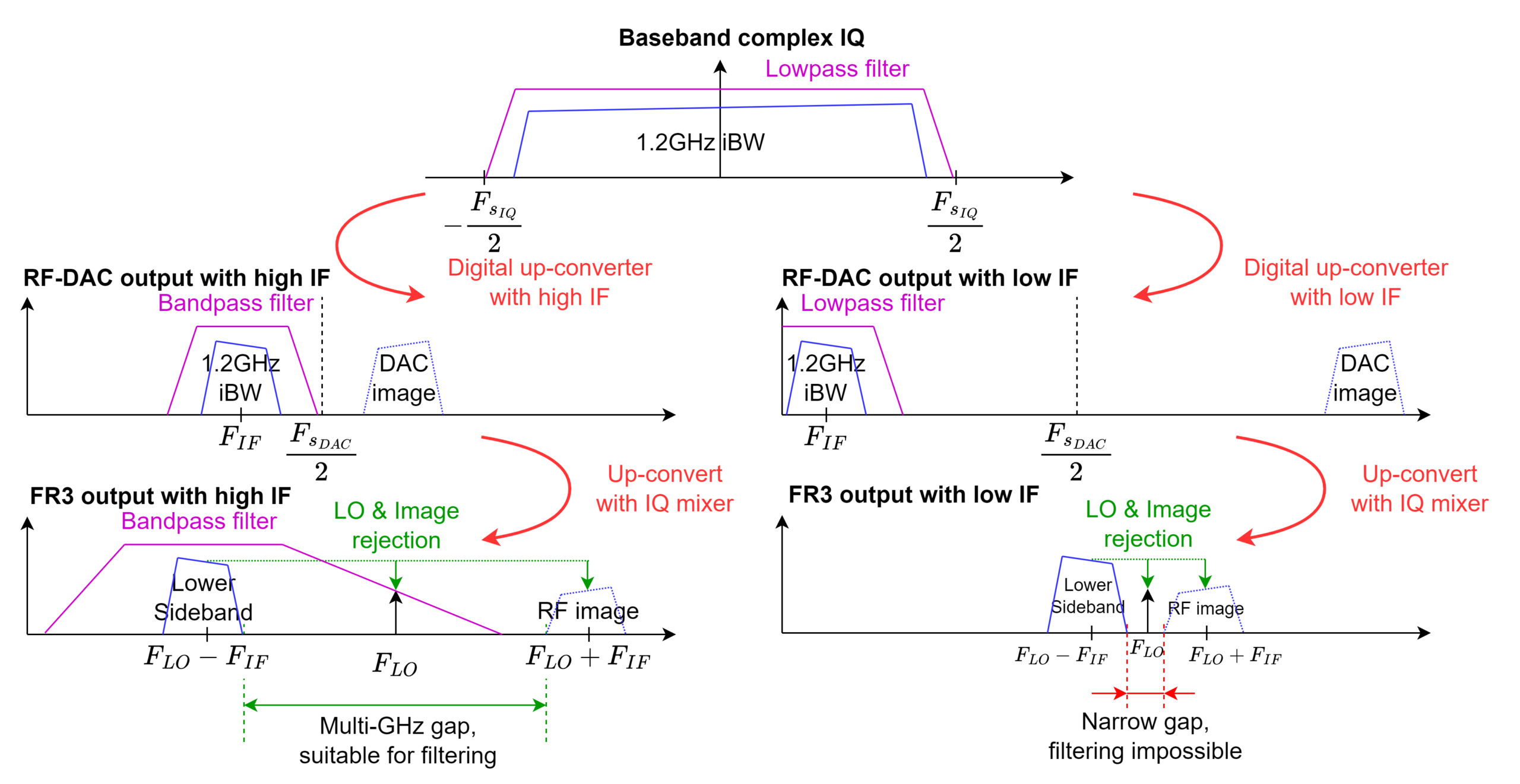
One relevant feature of the WFC725A (that applies to all Wupatec’s communication modules) is the strategic optimization of Intermediate Frequency (IF) selection. In the transmit path, the baseband signal is interpolated and shifted to an IF via a Digital Upconverter (DUC), followed by bandpass filtering to suppress DAC images. The signal is then upconverted to the FR3 band using an IQ modulator. By utilizing a sufficiently high IF, unwanted components such as RF images and LO leakage are positioned far from the signal bandwidth, allowing for efficient filtering. This architectural advantage would be lost if a lower IF were used, as shown in the diagram below:
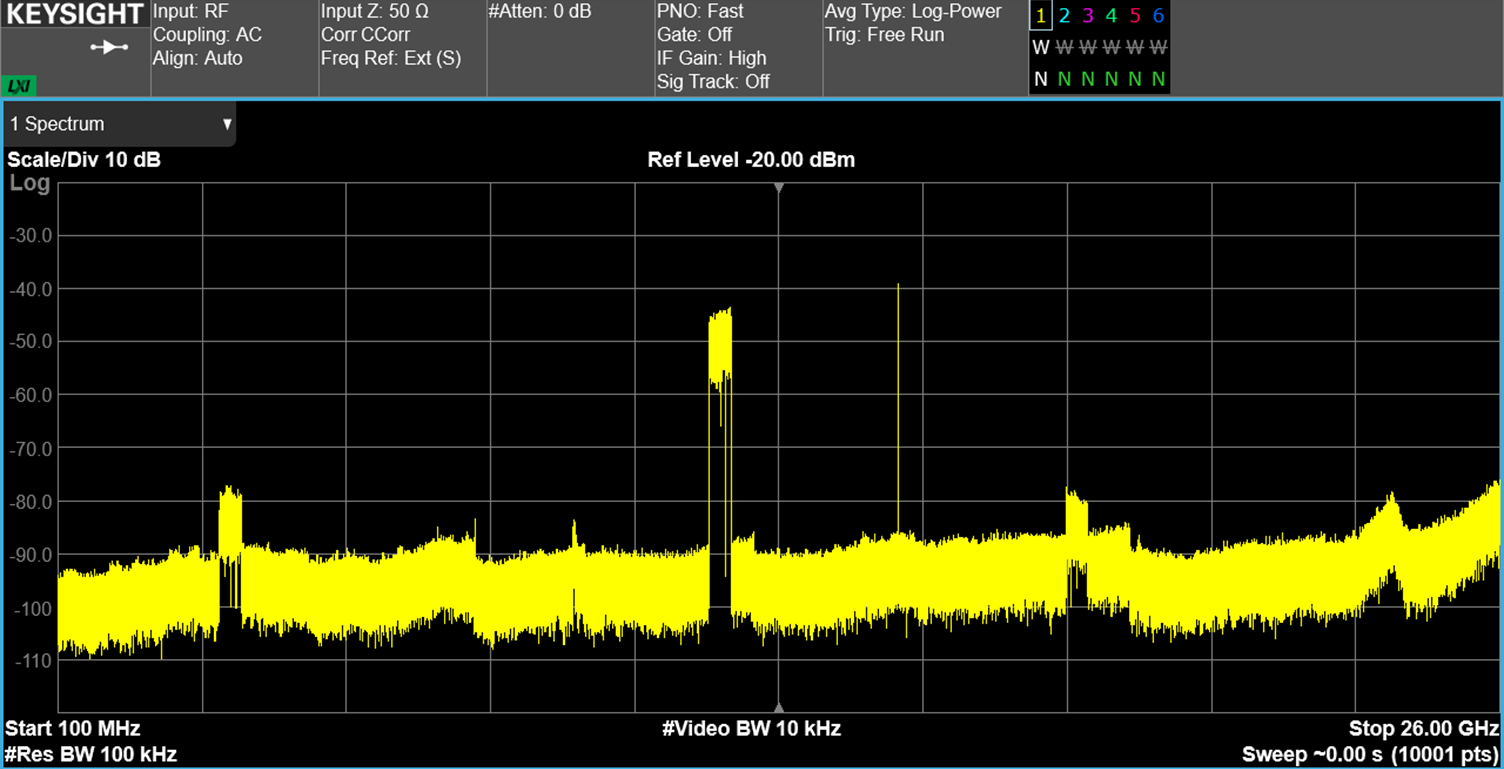
By utilizing a high IF, unwanted components such as DAC images, RF images, and LO leakage are positioned far from the signal bandwidth (see the spectrum image below of the transmit path). This spectral ‘breathing room’ enables highly efficient filtering, ensuring a clean and compliant spectrum across the entire 10 MHz to 25.8 GHz range.
The spectrum screenshot below represents the transmit path. Different signals can be identified: In the center, the transmission frequency. Moving to the right side, there is first a subtle leak signal coming out of the local oscillator and second, with lower amplitude, the image frequency. These two signals are far away from the center frequency of transmission (each square of the spectrum display is equal to 2.6 GHz). On the right side of the center frequency, there is a small leak of the IF input towards the RF output, again, far away from the center frequency. This is the reason why using a high IF gives this ‘breathing room’ for filtering.
By the way, this work was presented during the WSJ Workshop Session during the International Microwave Symposium in 2025. Check the related article on Microwave Journal here!
CONFERENCE DEMONSTRATIONS
The WUPATEC FR3 Extension Board was first shown during the International Microwave Symposium in San Francisco in 2025. Wupatec had a demo showcasing this board as a transceiver in the FR3 band, sending 5G signals into a Power Amplifier Module provided by Mitsubishi Electric. The transceiver was also applying directly the linearization algorithms (DPD, CFR) directly into the power amplifier.
This setup was first designed for use with the AMD ZCU670 evaluation kit and WUPATEC VST firmware. This compact module delivers up to 1.2 GHz instantaneous bandwidth. It supports sampling rates up to 1.474 GSa/s, making it ideal for multi-carrier, high-order modulation, and MIMO scenarios. Its vector signal generation and analysis capabilities allow precise EVM and ACPR characterization across 7–26 GHz, helping accelerate the design and validation of FR3-ready radio units.
The extension board supports 5G-Advanced (the enhanced version of 5G standardized in 2023), enabling ultra-high-speed data rates, massive capacity, and ultra-low latency. This paves the way for 6G, which will leverage the entire FR3 band to achieve even higher spectral efficiency and support massive simultaneous connections. With the commercialization of 5G-Advanced beginning this year, we have proven that the FR3 Extension Board is an indispensable tool for early adopters, academia, and industry leaders shaping the next decade of wireless connectivity.
RELATED PRODUCTS
CONTACT
Have a specific requirement?
Our RF engineering team is available to discuss your project and define the right configuration.
Contact us